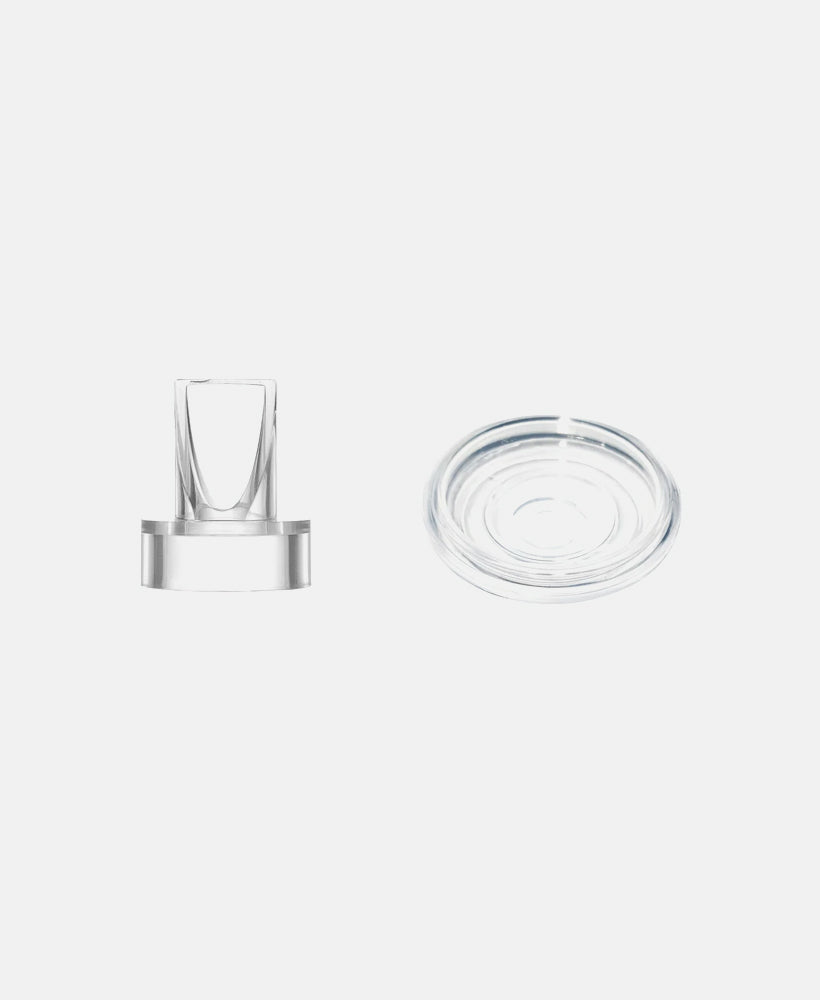
Pippeta Pump | 2 Valves & 2 Diaphragms
Pack of 2 valves and 2 diaphragms that work together to create the right suction for maximum comfort when expressing.
Compatible with Pippeta Wearable Pump and Pippeta Classic Pump. The diaphragm provides a barrier to prevent milk from backing up into tubing. Both pieces are BPA free.
PLEASE NOTE, THESE PARTS ARE NOT COMPATIBLE WITH PIPPETA COMPACT
How often should the valve + diaphragms be changed?
Just like the valve , the diaphragms in the back-flow protectors can stretch and degrade over time, impacting suction. We recommend to replace these every 2 to 3 months if you pump once a day, and replace every 6 to 8 weeks if you pump more frequently.
Once opened this product may not be returned.
1. Measure both nipples
Ever thought "hmm my boobs are two different sizes?" Most of us right? So, think the same with your nips, they may differ in size. It's always best to be safe and measure them both independently.
2. Reassess your fit regularly
What works in the beginning of your journey may be totally different two months in. If anything starts to feel 'off' then a good place to start is always by reassessing your flange fit. Some examples of why you would need to re-evaluate your flange fit would be:
- In the first few days after birth, your breasts may begin to feel fuller, swollen, or engorged, which can temporarily change your nipple size and shape. When that postpartum swell eases be sure to check your fit!
- If you’re pumping more often (e.g. to increase supply or build a freezer stash), your nipples may change slightly over time, meaning you might need a different size for ongoing comfort and efficiency.
- If you've experienced nipple trauma or soreness from a poor flange fit early on, or from issues with your latch, switching sizes as your body heals can often make all the difference.
- Changes in your menstrual cycle, return of periods, or hormonal fluctuations can also affect breast and nipple tissue, bare this in mind when embarking on your pumping journey.
3. Don't just measure!
Once you’ve measured for your correct flange size, it’s time to tune into your body and experiment with your breast pumps modes and suction levels. The goal is to create a comfortable, effective pumping experience where your flange and pump work in perfect harmony. What feels gentle and efficient for one mum may feel too strong or too light for another.
Tors Pearcy IBCLC and Infant Feeding Specialist
Blog posts
Article
Write text about your blog post.
Article
Write text about your blog post.
Article
Write text about your blog post.
Free lactation support with every pump
Breastfeeding can be tough. But you’re not alone. Our friendly lactation experts are on hand to offer free guidance, personalised support, and a sympathetic ear whenever you need it. It’s what they’re here for.
Meet the expertsFamilies also love:


It takes a village to raise a child.
Think of us as your neighbours.
Discover feeding tips, tricks, and advice from our supportive community.